University and college life can be exciting, but it is also one of the most demanding phases of a student’s journey. Between coursework, part-time jobs, and social commitments, the pressure to succeed often feels overwhelming. For many, the constant juggling act between deadlines and personal well-being becomes a heavy burden. This is where understanding the balance between mental health and studies is crucial. Students searching for effective strategies often explore guidance such as assignment help UK to ease academic challenges without compromising their mental well-being.
Academic stress is nothing new, but in today’s fast-paced educational environment, it is growing at an alarming rate. Long study hours, tight deadlines, and performance anxiety can all negatively affect one’s mental state. Finding the right equilibrium between health and studies ensures not just good grades, but also a fulfilling and sustainable learning experience.
This guide brings together practical strategies, stress management tips, and insights into how resources like assignment help and structured academic planning can make a real difference.
Why Balancing Mental Health and Studies Matters
Ignoring mental health in pursuit of academic excellence often leads to burnout, low productivity, and even physical illness. On the other hand, students who create a healthy balance are more likely to perform better, remain motivated, and enjoy the learning process.
Some of the most common challenges students face include:
Overloaded schedules – Multiple deadlines, lectures, and revision plans.
Lack of support – Limited guidance on managing heavy workloads.
Sleep deprivation – Staying up late to complete assignments.
Anxiety and performance pressure – Fear of failure or not meeting expectations.
By adopting smart study habits and making use of resources like academic assignment help, students can manage these stressors while protecting their mental well-being.
Understanding the Link Between Academic Pressure and Mental Health
Educational environments often celebrate high achievers, but the pressure behind those achievements can be hidden. A student struggling silently with anxiety may appear to be doing fine academically but might be close to burnout.
Research shows that students with unmanaged academic stress are more prone to depression, insomnia, and poor cognitive performance. The link between mind and study performance is undeniable: if mental health deteriorates, academic results follow.
Balancing both requires:
Time management – Allocating specific hours for study and rest.
Seeking help – Using reliable assignment help services for time-consuming tasks.
Healthy routines – Including exercise, hobbies, and adequate sleep.
Practical Tips for Maintaining Balance
Below are actionable strategies that students can incorporate into their daily routine to achieve balance between studies and mental health.
1. Prioritise and Organise Tasks
Creating a daily or weekly planner helps in staying on top of tasks without last-minute panic. By breaking down assignments into smaller chunks, students reduce the feeling of being overwhelmed.
Use digital planners or apps for scheduling.
Categorise tasks as urgent, important, or optional.
Allow buffer time between tasks for rest.
2. Set Realistic Study Goals
Setting unrealistic expectations often leads to disappointment. Aiming for perfection in every task creates unnecessary stress. Instead, focus on progress over perfection.
3. Learn to Say No
It is tempting to join every activity or social event, but balance requires setting boundaries. Saying no to unnecessary commitments ensures more time for rest and focused studying.
4. Utilise Assignment Writing Help
Sometimes, even the best time management cannot prevent academic overload. In such cases, seeking assignment writing help from professionals ensures quality work without risking one’s well-being. Reliable platforms such as Assignment In Need are designed to provide expert support while allowing students to focus on self-care.
5. Maintain Healthy Lifestyle Choices
Mental health isn’t just about study breaks – lifestyle habits play a significant role.
Eat balanced meals to maintain energy.
Stay hydrated for better concentration.
Exercise regularly to release stress hormones.
6. Take Digital Detox Breaks
Constant notifications, social media comparisons, and digital distractions can amplify stress. Setting screen-free hours, especially before bedtime, improves both sleep and focus.
The Role of Assignment Help in Reducing Stress
Assignments are a core part of academic life, but they are also the biggest stress contributors. With multiple essays, projects, and reports due within tight deadlines, students often find themselves overwhelmed.
This is where online assignment help proves useful. By outsourcing complex or time-consuming tasks, students save time for revision, relaxation, and extracurricular activities. Moreover, professional writing ensures well-structured, plagiarism-free, and academically sound work.
Benefits of Assignment Help:
Time efficiency – More hours for revision and personal care.
Reduced pressure – Fewer sleepless nights worrying about submissions.
Improved grades – Expert-written assignments aligned with marking criteria.
Learning opportunity – Students can use provided material as a reference for future work.
Whether it’s essays, dissertations, or case studies, a reliable assignment help website can provide much-needed relief during high-pressure periods.
Mental Health-Friendly Study Techniques
Not all study methods work for every student. Adopting strategies that suit one’s learning style while maintaining mental well-being is essential.
Active Learning Over Passive Reading
Instead of rereading textbooks endlessly, try:
Summarising information into flashcards.
Teaching concepts to peers.
Using mind maps for complex topics.
Pomodoro Technique
This method involves studying for 25 minutes followed by a 5-minute break. It prevents burnout and increases focus.
Self-Compassion in Learning
Mistakes and setbacks are part of education. Instead of self-criticism, practise self-compassion by acknowledging effort and progress.
Why Students Choose Assignment Helpers
The concept of an assignment helper goes beyond just academic writing. It is about guidance, resource provision, and stress reduction. Students often find themselves learning more effectively through well-prepared reference assignments.
Subject expertise – Specialists across different academic fields.
Common Mistakes to Avoid While Balancing Studies and Health
Many students make errors that unintentionally worsen their stress. Avoiding these can create a smoother academic journey.
Overworking without breaks – Leads to exhaustion.
Ignoring deadlines until last minute – Causes unnecessary panic.
Skipping meals or sleep – Reduces energy and focus.
Not seeking assignment help when needed – Results in compromised quality.
How Writing Services Support Mental Health
Professional writing services not only deliver quality assignments but also act as a safety net for students under pressure. By delegating certain tasks, learners gain time for hobbies, relaxation, and social connections – all vital for maintaining mental health.
Services like Assignment In Need focus on academic integrity, structured content, and deadline compliance, giving students the confidence to handle both studies and personal well-being.
Building Long-Term Academic Resilience
Balancing mental health and studies is not just a short-term need – it builds resilience for the future. Students who learn to manage stress, set boundaries, and seek reliable assignment help services are better equipped for professional challenges after graduation.
Key practices for resilience include:
Consistent self-care routines.
Seeking feedback and improving gradually.
Developing adaptability to changing circumstances.
Final Thoughts
Balancing mental health and studies is not about choosing one over the other, but about ensuring harmony between both. Effective time management, healthy habits, and the willingness to seek external support when necessary make academic life less stressful and more productive.
Professional support in the form of assignment help gives students the breathing space they need to focus on learning while staying mentally healthy. Using trusted platforms such as Assignment In Need (assignnmentinneed.com) ensures that students not only achieve their academic goals but also safeguard their well-being in the process.
Blogging has become the new way to make money online. Sites like affiliate marketing, which is focused on driving traffic to products and services through links, are seeing a drop in views.
Affiliate marketing is still a great way to make money from home, but blogging as an alternative has lots of benefits that might be just what you need for your business or personal blog. Many people confuse both categories.
Let’s find out what is better for you.
What is Affiliate Marketing?
Online businesses that use affiliate marketing pay an affiliate for each visitor or customer that was brought about by the affiliate’s own marketing efforts. In other words, you can be an affiliate marketer without having your own blog.
In order to profit from affiliate marketing, there are two basic methods:
1) By promoting products or services on your blog, website, or social media channels; or
2) By joining an affiliate network and agreeing to promote the products or services of businesses signed up to that network.
In most cases, affiliates are paid based on a commission system, meaning they receive a percentage of the sale price of any products or services they successfully promote. This can be a great way to earn additional income if you have an existing blog or website with a significant amount of traffic.
What is Blogging?
Your opinions, experiences, and expertise can be shared with the world by blogging. You can use it as a platform to engage with like-minded individuals and grow your audience.
There are many different types of blogs, but they all have one thing in common: they’re a place for you to share your voice. Whether you’re writing about your personal life, your interests, or your industry, blogging can be a great way to connect with others and build a following.
A few things to consider if you’re thinking about creating a blog. Make a decision regarding your topic first. This will be the focus of your blog and will help you attract readers who are interested in the same things as you are. Also, you have to be an SEO expert to succeed in the blogging industry.
Once you know what you want to write about, it’s time to start creating content. Blog posts should be informative and engaging, so make sure to put some thought into each one. If you need help getting started, there are plenty of resources available online (including this very blog!).
Finally, once you have some regular readers, it’s important to interact with them and create a community around your blog. Respond to comments and questions, and participate in social media conversations related to your topic. This will encourage repeat visits from customers!
Affiliate Marketing Vs Blogging
Pros and Cons of Blogging
Both affiliate marketing and blogging have advantages and disadvantages. Here are some crucial ideas to bear in mind:
-Blogging can be a terrific strategy to grow your readership and position yourself as an authority in your industry. However, it takes time to build up a following, and it can be difficult to make money from blogging unless you have a significant number of readers.
-Affiliate marketing can be a great way to make money online, but it requires a lot of hard work and dedication. You need to find high-quality products or services to promote, and you need to drive traffic to your affiliate links.
Pros and Cons of Affiliate Marketing
There are a few key differences between affiliate marketing and blogging. For one, affiliate marketing typically requires less time and effort to start generating income. With a blog, you’ll need to invest more time into creating content and building an audience before you can start making money.
Affiliate marketing also offers the potential for higher earnings than blogging. While it’s possible to make a full-time income from blogging, it takes a lot of work and dedication. With affiliate marketing, you can earn commissions on sales of products or services that you promote.
However, there are also some downsides to affiliate marketing. For one, it can be harder to build trust with your audience if they don’t know who you are.
Additionally, you’ll need to be careful about the products or services you promote – only promote things that you believe in and would recommend to others.
Is affiliate marketing or blogging better for you?
If you’re wondering whether affiliate marketing or blogging is better for you, it depends on a few factors. If you’re good at writing and enjoy sharing your thoughts and experiences with others, then blogging may be the better option for you.
On the other hand, if you’re more interested in making money and don’t mind promoting products or services, then affiliate marketing could be a better fit.
Some things to consider include:
-How much time do you want to spend on your side hustle? Blogging can take a lot of time and effort, especially if you’re just starting out. Affiliate marketing, on the other hand, can be done in your spare time and doesn’t require as much of an upfront investment.
-What are your goals? If you’re looking to make some extra money to supplement your income, then affiliate marketing could be a good option. If you’re hoping to build a brand or turn your side hustle into a full-time business, then blogging might be a better bet.
-How comfortable are you with promoting products? If you’re not comfortable promoting products or services, then affiliate marketing may not be for you. Blogging gives you the opportunity to share your thoughts and experiences without having to sell anything.
Similarities
There are a few key similarities between affiliate marketing and blogging. Both require you to create content, build an audience, and generate traffic. However, there are also some key differences between the two that you should consider before deciding which one is right for you.
Both affiliate marketing and blogging can be extremely profitable if done correctly. They both require a significant amount of time and effort to build up, but the rewards can be well worth it.
Another similarity between the two is that they both allow you to work from home and make your own schedule. This can be a great perk for people who want the flexibility to work around their other commitments.
The biggest difference between affiliate marketing and blogging is how you make money. With affiliate marketing, you earn commission on sales that you generate. With blogging, you can make money through advertising revenue, sponsorships, or product sales.
Future of affiliate marketing and blogging in 2023
As the internet continues to evolve, so does the landscape of affiliate marketing and blogging. In 2023, we can expect to see a few changes in the way these two industries operate.
For one, the use of artificial intelligence (AI) and machine learning will become more prevalent in both affiliate marketing and blogging. This technology will help to automate tasks and make decisions based on data-driven insights.
Additionally, we can expect to see more cross-platform collaboration between bloggers and affiliate marketers. For example, a blogger might team up with an affiliate marketer to promote a product or service on their respective platforms.
Another change we can expect to see is an increase in mobile usage for both affiliate marketing and blogging. More people than ever before are using their smartphones and tablets to access the internet.
This trend is only going to continue in the coming years. As such, businesses will need to optimize their websites and content for mobile devices if they want to stay ahead of the competition.
Finally, we can expect social media to play a bigger role in both affiliate marketing and blogging in 2023. Platforms like Instagram, Facebook, Twitter, and Snapchat will provide new opportunities for businesses to reach their target audiences.
We can also expect to see more influencer marketing campaigns as businesses look to tap into this growing trend.
conclusion
If you’re wondering whether affiliate marketing or blogging is the better option for you, it really depends on your goals and what you’re looking to get out of either option. If you’re interested in making money passively, then affiliate marketing may be a better option for you.
However, if you’re looking to build a brand and connect with an audience, then blogging may be the better choice. Ultimately, it’s up to you to decide which option is best for you and your goals.
Content marketing isn’t just a way of setting yourself apart from your competitors; it is now a necessity for building a brand. Content marketing is now a core strategy and lies in the heart of successful digital marketing campaigns. In today’s highly competitive business environment, there are many brands out there that are looking for creative ways in order to convey their message and tell their story. And, the best way that they can do this is through content marketing. However, before you dive in head first into the world of content marketing, you need to know a little bit more about the topic and the many different benefits that it brings.
During this short, but insightful article we are going to explain the importance of content marketing and why all businesses should use it to build meaningful relationships with consumers with the ultimate goal of turning them into paying customers. The importance of content marketing is actually something that all brands must understand to effectively include it into their broader digital marketing efforts. We are going to touch on the core fundamentals of content marketing. However, if you are looking for a more comprehensive guide then check out this blog post about content marketing by Revive.Digital, a full-service digital marketing agency from Southend-on-Sea.
Why Content Marketing is So Important
When buying a product or service, consumers will generally prefer using a credible brand rather than one that they have never heard of before. Trust is the single most important factor when it comes to a consumer’s final purchasing decision. And, that’s exactly why content marketing is perfect for building this trust. It gives you the opportunity to create a brand voice that will build your reputation and your personality. The brilliant thing about content marketing is that there are so many ways in which you can use it. With that being said, in the next section of this article, we are going to discuss the different types of content.
The Different Types of Content You Can Use
When it comes to developing your content marketing strategy, it can be quite difficult to decide what types of content to use. Different types of content can help you communicate with your target audience in different ways, so it’s good to start by defining your content marketing goals before you decide which formats to go with.
Infographics
Infographics are actually one of the most shared types of content on the internet. They are a great way of presenting complex data into a more digestible form of content. When creating infographics, it is essential to the graphic design element right, so the information is presented attractively.
Blogs
Blog posts are the more commonly associated type of content when people think of content marketing. They are relatively easy to create and can bring a business a range of different benefits.
Guest Posts
Guest posting is the practice of contributing content to another person’s website in order to build exposure, backlinks, and authority. It is a brilliant way of reaching an audience that you haven’t yet tapped into.
Videos
Video is one of the best pieces of content to use if you are looking to grab the attention of your target audience. The number one reason why you should use video as part of your content marketing strategy is because of the conversion rate that they generate. Videos are known to convert more customers than any other piece of content.
Podcasts
Podcasts are also a great type of content as it allows consumers to access them at their own convenience. They are also brilliant for repurposing content. Think about it this way. If you have a great piece of video content that is informative and engaging, then why not turn it into an audio file and use it for a podcast as well.
Harness The Power of Social Media For Your Content
Social media channels are where online customers hang out and socialize with their friends and family. Getting social media shares for your content can also increase its performance and visibility. One straightforward, but effective way of getting more social media shares for your content is to add social bookmarking to your blog posts. This will help consumers share the pieces of content that they find the most useful. Another way to ensure that your content looks great when it is shared on social media is by implementing OpenGraph. This is a basic method that can help increase your content’s visibility on social media and ensure that your webpages render correctly. Most websites now have OpenGraph tags built into them these days. But, if you are not sure whether yours does or not. Then we highly recommend that you find out as soon as possible.
About The Author:
Lloyd Parkinson is a Content Marketing Executive at Revive.Digital. Lloyd has experience writing web and social media content on behalf of B2B and B2C organizations ranging from insurance brokers, legal and financial services, recruitment agencies and entertainment companies. He conducts research and writes about an extensive number of topics. Lloyd aims to educate his readers through his creative writing by providing them with informative and valuable content. He seeks to simplify complex topics for general readers as well as writing technical content for the well informed.
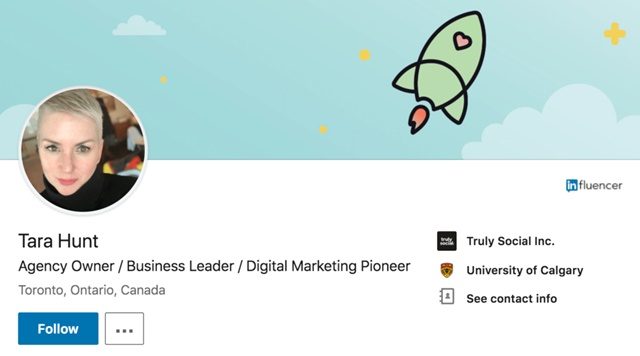
This is simple yet the most popular example of the LinkedIn headline.
She used clear and concise formatting. You can get a clear idea of what she does without the need for extra words.
Another important thing to mention in the headline is that she makes use of slashes to separate her work. Many times you will see long sentences or a vertical bar instead.
If you want to stand out, even the smallest thing can make a big difference.
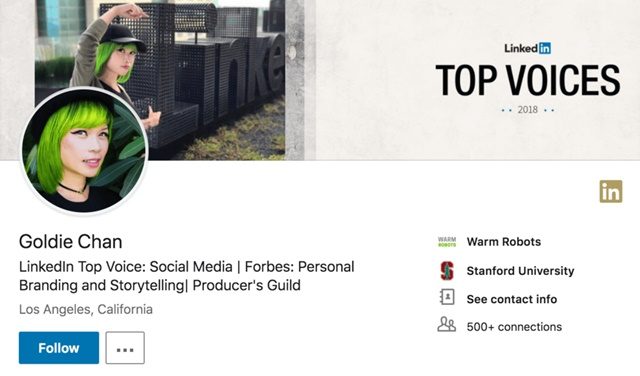
Goldie’s headline is something very relevant and impressive that attracts the attention of people.
Since she is a top voice on the network her profile is on, mentioning that in the headline is a great idea.
She also mentioned about another recognizable brand name Forbes in her LinkedIn headline. This is also a major advantage of her profile that instantly connects people.
If you have similar achievements, including them in your headline is a smart decision.
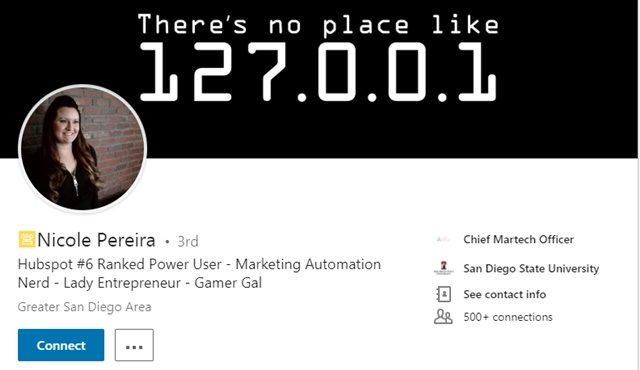
The headline of Nicole Pereira is a great example of simply using your work in your headline.
What is more attractive in her headline is she mentioned HubSpot rank 6 Power User- Marketing Automation which is a very reputed brand. Mentioning this in her headline makes her visible in a lot of LinkedIn searches.
Also, she has mentioned Lady Entrepreneur in her headline which is a great attractive keyword for entrepreneurs.
5. Josh Fechter
The one thing that draws attention to Josh Fechter’s headline is that his company is hiring.
It is the main thing that you would like your visitors to take action and using it in the headline is a smart move.
It is the main call to action that Josh added in his headline that will attract more people who want to apply for the post.
Other than this he mentioned accolade in his headline that makes his hiring announcement stand out.
Using your LinkedIn headline to full advantage, make things easy possible for visitors.
She clearly mentioned in very few words about what she is and where you can find more about her.
People mostly use a call to action in their headline, but dropping your URL in the headline can reduce a lot of effort.
She can get a handsome number of visitors due to her attracting headline.
As you know, headline space is just 122 characters, so, if you don’t have enough space, you can simply put your website link in your headline.
These are some inspirational LinkedIn Headline examples from which you can learn a lot.
There is nothing right or wrong about writing the LinkedIn headline, the above examples clearly demonstrate different things for different people.
Relate these examples with your accomplishments and find out which best suits you.
About The Author:
George is a corporate relationship manager at Inc Academy – Provide Social Media Marketing Course in Dubai and he likes to share his knowledge on digital marketing topics.
The success of a website depends heavily on its content. After all, it’s the content that wins conversions. The design of your website is, of course, essential in making an impression on your customers, but it’s the content that will keep your customers coming back to your site. Search engines don’t rank websites by how they look, they rank them by the quality of their content. This brings us to the question of how to improve your content to improve the conversion rates of your website.
Here are some tips to improve your content to earn more conversions for your website.
1. Pick an attention-grabbing headline.
The headline is the first thing that visitors will notice our content. Also, it’s the headline that everybody will see when they find out about your content on social media, on a homepage, or in search results.
What makes a great headline?
It must be clear. Your headline should be clear and descriptive. You want it to be easily understood by everyone who stumbles upon it.
It must be concise and exact. Your headline doesn’t have to be too long just to offer the right context. In fact, your title must not exceed more than 60 characters if you want your content to appear in search results.
It must be relevant. Your title must be related to your content. Don’t use “clickbait” titles just to earn conversions.
It must have an appeal. Your title must have appeal to garner attention. Pick a title that has strong emotional appeal.
2. Explore other types of content.
Another good way of making your conversions keep coming back to your site is to mix up different types of content. Here are some types of content that you can use on your website.
Infographics. These are graphic visual representations of information and data designed to make the data or information easy to understand. Your visitors will most likely prefer looking at infographics instead of reading long, written texts because they are more engaging.
Images. Images are one of the most common types of website contents. They bring a powerful message and create a memorable experience for your visitors. They also increase the chances of your content to be remembered by your visitors. Your visitors will most likely be interested in your content if you pair it with a relevant image.
Videos. Videos are the most popular type of website content, and they will most likely continue to be for the years to come. You can use videos to:
expand your reach.
share tips and “how-to” ideas.
increase your credibility.
build trust.
increase your engagement.
add value to your website.
If you know how to use these types of content and incorporate them into your website, reaching your target audience and increasing your conversions should be easier. The goal of exploring other types of content is to keep your target audience engaged and enjoying what you offer on your website.
3. Optimize your content for SEO.
You can’t ignore the importance of SEO in the creation of your content. SEO plays a key role in improving your content to improve your website’s conversion rates.
Here are key important things to bear in mind when optimizing your content for SEO purposes.
Title. Your title must combine relevance and brevity if you want search engines to understand what your content is all about. It has to be clear and descriptive for your readers and the search engines.
Your content will never rank high on search engines if you don’t incorporate relevant keywords in the content. Also, you need be smart about how you use your keywords because overusing them can lead to negative results.
Headings. Headings also play an important role in keeping your content structured and easy to understand. From an SEO perspective, using headings on your written content will help search engines understood what your content is all about.
Meta descriptions. Meta descriptions are a short summary of your content. It is a short text that appears right below your title in search results. This makes meta descriptions the second most important part of your content after your title. Along with your title, meta descriptions contribute to your target audience’s decision to click on your link.
4. Don’t forget about social optimization.
You can’t forget about social optimization when it comes to improving your content. Successful content echoes its success on social media as well. If your content is good, it must have a lot of likes, comments, and shares on social media.
Social optimization is essential to expand the reach of your content. The number of potential conversions on social media is tremendous, and it would be a waste if you don’t bring your content to a wider audience. This is why you have to optimize all of your content for social media as well.
Here are key tips on how to optimize your content for social media.
Make your headlines interesting to the eyes of your target audience on social media.
Include sharing buttons on your content to encourage your audience to share your content with others as well.
Make a good description of your content and make it as short as possible.
Be wary of the images you are using on your content, especially the size of your featured image.
Remember that you don’t need to be a professional content creator, or a writer, to create high-quality content. It’s all about understanding how content works and the opportunities it can bring to your business. If you can consistently deliver high-quality content, more and more people will keep coming back to your websites which leads to better conversion rates.
About The Author:
Kate Anderson is an aspiring web designer who has been working hard on developing her skills. She enjoys creating websites and in her spare time, she loves to walk along the beach with her dog. She currently writes articles for Wearetg.com.
Electronic Commerce, better known as “E-commerce”, is one of the best marketing strategies of today. It is the buying and selling of products or services over the internet. Take note that any form of a business transaction conducted electronically is e-commerce.
When it comes to selling online, how can a seller drive sales to its e-commerce website? The answer is by creating compelling and attractive content. Here are some tips on how to create powerful content for your e-commerce website in order to drive sales.
Feature Lots Of Benefits In Your Headline
Your headline can significantly affect your sales – that’s why you need to make it appealing and convincing. You need to grab your visitor’s attention to convince them to stay and read what you are offering. It’s best practice to create a headline which explains what the product does rather than what is it. By doing this, the visitor has a better incentive to continue reading your page.
Avoid Keyword Stuffing
This is one of the common errors made by marketers. Search engines such as Google don’t allow those sorts of SEO tactics today. If you want to drive sales, you need to have high search rankings. For that to happen, you need to choose your primary keywords carefully. You also need to position them in the right places such as in the title, start, and end of context – that’s all.
Add Credibility To Your Content
When creating content, it is vital that you build trust, so that visitors can trust you. This way, they will be less hesitant to buy from you. One of the best ways of building trust or credibility is by posting testimonials. It’s important that these are genuine testimonials from true customers. You can also build credibility by adding credentials, background details, and experience. This is another good way of convincing readers that you are legit and trustworthy.
Avoid Duplicate Content
If you want to improve sales, then take the time to write about your products individually. Duplicate or generic text/copy can now be easily tracked by Google which can be detrimental to your business if it results in lower rankings for your e-commerce website. If that happens, it will be much more difficult for you to attract visitors via organic search.
Change The Appearance And Formatting Of Your Content
Let’s face it – only a few will read your content from top to bottom. Many people usually just scan the content and only read the words or phrases that they think are important. So the best practice here is to:
Add sub-headlines to emphasize critical messages
Use bold or italic fonts when listing the essential benefits of your product or service
Vary the length of your paragraphs
Use bullet lists to highlight key points
Leave the right-hand side ragged
Avoid Grammar, Spelling, Syntax, and Formatting Errors
Having incorrect grammar and spelling in your content will undermine the clarity of your message. It can also create doubt in mind of readers – which can result in potential lost sales. Make sure that your content has a professional look.
Use Ethical Urgency To Convince Readers To Buy Now
When it comes to driving sales, your content must have a sense of urgency towards your readers, encouraging them to buy now. The best place to use this approach is towards the end of your content, which is usually near the call to action. One of the best techniques for inspiring a sense of urgency is by offering a limited time price discount.
Include Images In Your Content
One of the most powerful sales tools for an e-commerce website is the images being used. If you want to boost sales, then try to ensure you have as many high-quality pictures of your product or service as possible. It’s equally as important to test the placement of these images in order to find what has the maximum impact on your online sales. For example, you could test positioning them to the left of your product description versus to the right. You could also test adding images to your cart page as well, in an effort to decrease checkout abandonment. Test as many variations as you like and see what works best for your website.
Driving sales doesn’t have to be that hard, so long as you know the right things to do. The next time you sell a product online, let this post be your guide for creating a powerful content to drive sales, boost your web marketing ROI and improve your eCommerce conversion rate.
About The Author:
James Spittal is the founder of Conversion Rate Optimisation and A/B testing obsessed digital marketing agency, Web Marketing ROI. They help brands with high-traffic websites optimize their conversion rate using A/B testing and personalization.
We love to create awesome websites for small businesses! It is our passion and goal to help as much as possible people with a beautiful online presentation that represents who they are and what they stand for.










 Kate Anderson is an aspiring web designer who has been working hard on developing her skills. She enjoys creating websites and in her spare time, she loves to walk along the beach with her dog. She currently writes articles for

 We love to create awesome websites for small businesses! It is our passion and goal to help as much as possible people with a beautiful online presentation that represents who they are and what they stand for.