Mobile apps have long been the centrepiece of customer engagement strategies. From onboarding to support, brands have leaned heavily on apps to guide the user journey. And while they’re undeniably effective, they’re no longer enough.
Despite high download numbers, 1 in 4 Americans abandons an app after a single use. Push notifications, once seen as a direct line to users, now witness open rates below 3% for many industries in the US. So even after someone installs your app, your ability to reach them can quickly dwindle.
Meanwhile, other channels are gaining traction. SMS open rates average over 90%, and messaging tools like web chat and email continue to register strong engagement. This shift in behaviour is why digital-first brands are moving beyond app-centric thinking.
They’re embracing multi-channel strategies that meet customers where they already are, and on the channels they trust and actually use.
Smart Way to Engage Your Target Audience: Go Multi-Channel
Customers today don’t operate in silos, and your communication strategy shouldn’t either. Multi-channel engagement allows you to reach people wherever they’re most active, be it through SMS, web chat, or via social media.
Here’s how to use multi-channel communication for maximum effects:
1. Meet customers where they are
Only a fraction of users regularly open branded apps, but nearly everyone checks their texts, email, or social feeds daily. If your message only lives in one place, you’re missing touchpoints that matter.
2. Deliver personalized experiences
Different channels enable different styles of interaction. You might use email for long-form onboarding, web chat for instant support, and SMS for quick reminders. The ability to tailor your tone and timing makes personalization more effective.
3. Maintain brand consistency across touchpoints
Whether someone engages on your website, replies to a text, or interacts on Instagram, your voice, tone, and values should feel consistent. Multi-channel tools help synchronize messaging across teams and channels.
4. Offer a seamless experience
Customers shouldn’t have to repeat themselves across channels. When your tools are integrated, someone can start a conversation via web chat and pick it up later via SMS or email, without losing context.
5. Support follow-ups, reminders, and onboarding
Multi-channel flows are ideal for drip campaigns, payment reminders, and welcome journeys. By using multiple channels in tandem, you reduce drop-offs and connect with the audience at just the right time.
How It Helps: Insights + Optimization
With every additional channel, you collect more data: how customers respond, when they’re active, what they ignore, and which actions they take next. These insights help you refine not only your messaging, but also your timing and channel selection.
This level of visibility is nearly impossible with a mobile app alone. While apps give you in-app analytics, they don’t show what happens when a user drops off or ignores a push notification. But when you’re engaging across SMS, email, and chat, you gain a comprehensive overview of the customer journey.
Here’s how that data-driven multi-channel communication strategy plays out:
Behavioral insights: Understand channel-specific behavior, and figure out who prefers email over SMS, or who clicks but doesn’t convert.
Time-zone aware delivery: Schedule outreach based on when individuals are most likely to engage.
Funnel optimization: Spot where users drop off, and plug gaps with alternate channel nudges.
Content relevance: Refine what you say based on what worked across different touchpoints.
Performance benchmarking: Compare engagement across channels to double down on what’s working.
In short, a multi-channel approach not only improves the chances of reaching your target audience, but it also gives you the feedback loops to do it smarter every time.
Key Channels to Engage the Target Audience
No single channel holds all the answers. The key is to understand the strengths of each channel and how they complement one another. Here are five essential channels that help you engage your target audience beyond mobile apps, backed by real examples from well-known brands.
1. Web Chat
Instant, contextual, and always-on web chat helps you engage visitors in real time. When powered by Conversational AI, it becomes even more powerful: answering queries, capturing leads, and qualifying prospects without human intervention.
Amtrak, the U.S. rail service, implemented a virtual assistant named “Julie” using conversational AI. Julie handled over 5 million customer requests annually, helping reduce support costs and response times dramatically.
Similarly, you can also use Web Chat for:
Lead capture
Instant Q&A
Self-service workflows
Escalations to live agents
2. Social Media
Social channels are a natural place for real-time, informal engagement. When combined with automation and CRM integration, they become powerful relationship tools.
KLM Royal Dutch Airlines famously used Facebook Messenger, Twitter, and WhatsApp to deliver booking confirmations, boarding passes, and customer service. The campaign resulted in over 15,000 interactions per week, with an average response time of 30 minutes.
Similarly, you can use social media for:-
Brand updates and announcements
Event promotions
One-on-one conversations
Community engagement
3. SMS
SMS has near-instant reach and the highest open rates among all digital channels. Its simplicity and immediacy make it ideal for alerts, reminders, and transactional updates.
Chipotle used SMS in its 2020 “Free Delivery” campaign during the COVID-19 pandemic. By sending time-sensitive promo codes via text, they saw a 25% increase in redemptions compared to email-only offers.
Similarly, you can use SMS for:
Reminders and alerts
Application status updates
Short links for action
Follow-ups after missed calls
4. Email
Email is essential for content-rich updates, detailed workflows, and B2B communication. When layered with automation and personalization, it delivers strong ROI.
Netflix sends personalized recommendation emails based on a user’s watch history and behavior. This campaign has helped boost retention and engagement across multiple markets by driving viewers back to the platform.
Similarly, you can use email for:
Onboarding and nurturing flows
Transactional communication
Promotions and updates
Long-form content
5. Direct Mail
Direct mail stands out in a saturated digital world. It’s tactile, targeted, and trust-building, especially when used for high-value customer segments.
Google sent personalized direct mailers to SMBs inviting them to use Google Ads, often including vouchers and QR codes. This strategy played a major role in onboarding new advertisers, especially those not yet fully digital.
Similarly, you can use direct email for:
High-value customer outreach
Contract or document delivery
Brand reinforcement
Event invitations or follow-ups
Conclusion
The problem isn’t that mobile apps are ineffective; it’s that they’ve become predictable. Most brands now follow the same pattern: push a notification, wait for engagement, and hope the user comes back. But that model no longer matches how people behave.
In the US, less than 20% of users allow push notifications for long-term, and most app sessions last under 3 minutes.
The signal is clear: you can’t build real relationships on a single channel.
Multi-channel engagement gives you options, and more importantly, it gives your audience choices. Someone might ignore your app, but reply to an SMS. They might miss an email, but respond instantly to web chat. By meeting people where they’re already active, you reduce friction and increase the odds of meaningful interaction.
But channel expansion alone isn’t the answer. What separates good strategy from noise is orchestration. That means syncing conversations, tracking context, and making every message feel like part of a unified experience, not five disconnected nudges. With Conversational AI, brands can now manage this complexity with far less effort, stitching together interactions across channels without losing personalization or compliance.
Are you eager to maximize your revenue and explore new opportunities?
Look no further!
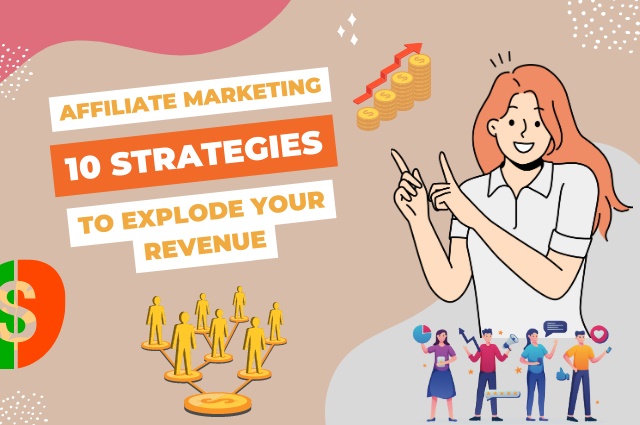
Affiliate Programs are your gateway to success. Picture this: you can increase your earnings without investing huge sums or breaking a sweat. Sounds exciting, right?
Let me guide you through the amazing realm of Affiliate Programs.
The Potential of Affiliate Marketing
Affiliate marketing is a marketing strategy in which affiliate marketers advertise products or services offered by other companies and earn commission on every sale made through their own affiliate link. It has become popular because it is a win-win for both the affiliate marketers and the product/service providers.
By becoming an affiliate marketer, you tap into a vast world of opportunities. You can advertise various products and services. Each one is targeted at a specific audience. The more targeted and specific your marketing is, the more likely, you will attract customers who are genuinely interested in what you must offers.
The beauty of affiliate marketing lies in its potential to generate passive income. Once you have set up your promotions and established a steady flow of traffic to your affiliate links, you can earn commissions even while you sleep.
However, to unlock the full potential of affiliate marketing, you must master the art of strategically promoting products and effectively leveraging various marketing channels.
1. Understand Your Niche: The Power of Specialization
In the vast landscape of affiliate marketing, understanding and selecting a niche that aligns with your interests and expertise can make all the difference. Choosing a niche you are passionate about enables you to create authentic and effective promotional content that resonates better with your target audience.
Research is the key to identifying a profitable niche. Start by brainstorming topics that genuinely interest you and hold potential for a substantial target audience. Analyze competitors and evaluate the demand for products or services in that niche. Keyword research tools can be used to uncover relevant and high-traffic search terms that can drive organic traffic to your promotions.
2. Building a Solid Online Presence: Establishing Authority
A strong online presence is vital for affiliate marketers looking to establish credibility and trust with their audience. Your website or blog serves as the hub for your affiliate promotions, making it essential to optimize it for search engines and user experience.
Search Engine Optimization (SEO): Optimize your website for relevant keywords related to your niche. Use long-tail keywords to target specific queries and attract more qualified leads. Meta tags, title tags, and high-quality content all play a role in improving your website’s search engine rankings.
Engaging Content Creation: Content is the backbone of your affiliate marketing efforts. Create informative blog posts, product reviews, and engaging videos that provide value to your audience. Incorporate your affiliate links seamlessly within the content to avoid appearing too sales-focused.
3. Choose High-Quality Affiliate Programs: Quality Over Quantity
The success of your affiliate marketing endeavors heavily relies on the quality of the products or services you promote. Aligning yourself with reputable and high-conversion affiliate programs enhances your credibility and fosters a positive relationship with your audience.
Look for affiliate programs that offer fair commissions, provide excellent support to affiliates, and have a track record of timely payments.
Additionally, consider the relevance of the products to your niche and audience. Promoting products that genuinely solve your audience’s pain points ensures higher conversion rates and customer satisfaction.
4. Leverage Social Media: Tapping into a Massive Audience
Today, many businesses use social media platforms to interact with their customers. In the affiliate marketing space, social media has a major impact on driving traffic to your ads and expanding your reach.
Each social media platform has its unique strengths, and your approach should vary accordingly:
Facebook:Create a business page and join relevant groups to connect with potential customers. Share engaging content, run targeted ads, and leverage Facebook Live to interact with your audience.
Instagram:Visual content thrives on Instagram. Use high-quality images and videos to showcase products, and use features like Stories and IGTV to keep your audience engaged.
YouTube:Video marketing is incredibly powerful for affiliate promotions. Create informative product reviews, tutorials, and demonstrations to captivate your audience.
Pinterest: Ideal for promoting visually appealing products, Pinterest allows you to reach a predominantly female audience seeking inspiration and solutions.
5. Create Compelling Content: Captivating Your Audience
Content creation is an art that involves engaging your audience, addressing their pain points, and showcasing the benefits of the products you promote. Here are some content creation tips to excel as an affiliate marketer:
Storytelling:Narrate your personal experiences with the products you promote. Share success stories and case studies to humanize your promotions.
Organic Affiliate Link Placement: Avoid forceful and pushy sales tactics. Integrate your affiliate links organically within your content to maintain authenticity.
Email marketing remains a powerful tool for building and nurturing relationships with potential buyers. By collecting email addresses through lead magnets and opt-in forms, you can communicate directly with your audience and provide them with valuable content.
Segment your email list based on interests and preferences to deliver targeted content. Craft persuasive email campaigns that offer solutions and incentives to encourage conversions. Be consistent with your email schedule and avoid bombarding subscribers with excessive promotional emails.
7. Harness the Power of SEO: Driving Organic Traffic
Search engine optimization (SEO) is the backbone of organic traffic generation. By optimizing your website and content for relevant keywords, you can rank higher in search engine results and attract more qualified leads.
Keyword Research:Identify and target keywords with high search volume and low competition. Use tools like Google Keyword Planner to discover valuable keywords for your niche.
On-Page SEO:Optimize your website’s meta tags, title tags, and headings with targeted keywords. Create high-quality, informative, and engaging content that satisfies search intent.
Backlink Building: Earn backlinks from reputable websites to boost your website’s authority and credibility.
8. Use Webinars and Video Marketing: Engaging Your Audience
Webinars and video marketing have proven to be highly effective in affiliate promotions. Hosting webinars allows you to interact with your audience in real time, answer their questions, and showcase the benefits of the products you promote.
Webinars: Choose topics that resonate with your audience and align with your niche. Offer valuable insights and actionable tips to keep attendees engaged.
Video Marketing:Create informative and visually appealing videos that demonstrate product features and benefits. Host product reviews, tutorials, and unboxing videos to provide an immersive experience to your audience.
9. Implement A/B Testing: Optimizing Performance
An A/B testing strategy is a method for optimizing affiliate marketing campaigns based on data. By testing various elements, you can determine which ones are most effective for your target audience and adjust your promotions accordingly.
Conduct A/B tests:
Headlines and Call-to-Actions: Test different headlines and CTAs to maximize click-through rates.
Content Formats: Compare the performance of blog posts, videos, and infographics.
Landing Pages: Experiment with layout, design, and content to boost conversion rates.
Email Campaigns: Test subject lines, content, and sending times to increase open and click-through rates.
You may fine-tune your affiliate marketing strategy and obtain greater results by continuously analyzing the data from your A/B testing.
10. Monitor, Analyze, and Adapt: The Power of Data
To be successful in affiliate marketing, you must be careful in tracking and analyzing your performance data. Track critical indicators such as website traffic, conversion rates, click-through rates, and income earned using analytic software.
Your campaigns must be optimized based on data-driven decisions. Identify patterns, trends, and areas of improvement from your data. Regularly assess the success of your affiliate promotions and adapt your strategies based on the insights gained.
Conclusion: Empower Your Affiliate Marketing Journey
In conclusion, affiliate marketing presents an unparalleled opportunity to build a thriving online business and generate passive income. By implementing the ten strategies exposed in this article, you can enhance your revenue potential and leave other affiliate marketers behind.
Keep in mind that there are a few things you can do to make money through affiliate marketing, including identify your niche, creating an online presence, selecting quality affiliate programs, using social media, creating attractive content, exploring email marketing, using SEO, conducting webinars and video marketing, conduct A/B tests, and monitor and evaluate performance statistics.
It is important that you keep focus and consistency, as well as to ensure that you are giving value to your audience. Don’t be scared to explore new things and grasp chances when they present themselves.
Take the first step toward explosive revenue growth in affiliate marketing and embark on a rewarding and fulfilling journey to financial freedom.
In the 21st century, it’s possible to maintain your car and determine all about your car maintained by using your mobile phone. It is beyond the expectations that how van a cell phone will determine your car’s fuel, fuel consumption, etc. It is not easy and economical to take care of your car as it needs a lot of time and funds. Car or any vehicle users have to pay much for their sudden oil or fuel end, for tuning and other maintenance. This issue could be fixed by using mobile apps that before time let you know that your car is running short of fuel or gas. Most of the smartphone apps are introduced to serve car users perfectly and its popularity widespread all over the world. Due to the developing interest of people among new innovative technology circle apps have a very significant position in all aspects of the field.
Car apps have a very significant position in the automobile industry with new technology cars like tesla trucks. Similarly Car maintenance apps develop a very essential role in medication and innovation bringing some of the new apps which help to reduce the efficiency of maintenance of the car in a very efficient way and Such apps are designed and developed to make the life of car users easy. These mobile apps provide valuable information and let you know how you can take care of your vehicle economically and effectively. Such apps offer premium features or characteristics that may aid your car maintenance and other processes.
1. Simply Auto
It’s an android app that manages your vehicle. It has 0.5 million downloads and has 4.5 ratings on Google play store. It helps you to track your mileage and fuel costs, services, and other relevant expenses. It has multiple features just like Automatic Mileage recording this feature automatically tracks your all trip wherever you move. It also has the service reminder option that will make a reminder tune for you when you want to put some services on your car. The best feature is it allows you to get a login to your cloud for backup.
2. Drivvo
An app is introduced for making you remember all services your car needs. This app is available on android google play store. This app also sports iPhone mobiles. This app reminds you when it is required to send your car for tuning service. Drivvo is designed and developed to keep the focus on the needs of a car user for car services. This app assists a user in remembering to make a schedule for your car maintenance services user add up information once on the app and add details about the car. This app accords the user to have a history or complete record of services of your car so, you may get to know the costs and expenses for major car repairs and maintenance.
3. Car Maintenance
Car Maintenance app is also available for android mobile phones. An app that is helpful and useful for a vehicle. It can track. This app also serves as a car maintenance app. Due to huge differences in Gas prices even in the corners of the same city its really difficult to cooperate with overcharges. Gas Stations that are offering their services near roads where there is a huge demand for gas mostly charges extra prices to cash their demands whereas the gas stations in residential areas far away from main roads charge less comparatively. It would be too awful for one who is short of gas and he or she has to drive back to a gas station with low prices this station might be at the other corner of the town. This app assists in this regard by letting you know where there are low prices of gas available in your area near your current location. This all happens when you got gas and you enter clear directions of that specific station to this app then this app assists you in getting to this station whenever your car is short with gas.
4. Fuelio
An app that is designed to assist more in the matter of vehicle’s or car’s fuel. As its name refers to the main function that this app performs is fuel related. Fuelio app makes it convenient for a user to have a complete calculated record of the fuel and gas process also the price per mileage based on the prices of gas today. Fuelio helps you to set customized reminders for your car maintenance services. This makes you remember and you would never forget to get maintenance of your car as per the schedule.so this becomes common nowadays and attracts the demand of the customer.
5. Car Expense manager
An amazing app that is developed and designed keeping focus on a variety of needs of a car user. This app makes it easy for a user to understand his or her vehicle in a good way. This app makes you alarmed when there is an issue with your car or vehicle. The feature in this app helps to regulate the fuel economy and performance of the engine. This app detects problems related to your engine even while driving also assists in knowing the problems and how to deal with car or vehicle-related problems timely. This app is a bundle of premium features as it reminds you when your car or vehicle needs maintenance services like tuning, oil change, wash, etc. This app allows a user to determine the health of multiple vehicles at the same time using the same app
Conclusion:
Nowadays everyone needs help not in their matters but for their vehicles too. Various users need help related to their vehicle maintenance when there is no one to suggest to them for their car matters. Keeping in the eye all these needs and requirements some experts developed apps that help in car maintenance, Gas availability and many others. Some of the most common apps that one must have been described above.
About The Author:
Hi, my name is Laraib. A professional content writer, technology and travel blogger, with a creative bent of mind. I have authored and published a plethora of articles in the niche of travel and technology domains. Here is my own blog globe news.
Whether you are a consultant, architect, or property developer, the one thing you have in common is that you want your new development to be noticed. In the crowded world of property development, it can be challenging to get your projects the necessary coverage to make them profitable.
The competition is fiercer than ever, ensuring that you will need to employ specialist online and offline marketing skills to set yourself apart from the rest of them.
If you are looking for tips and tricks to make this your year, read on to discover five ways to make your property development stand out.
1. Include exclusive, cost-effective characteristics
If your property is going to attract attention, you want it to be because of the unique features that you have chosen to add. Choosing to include clean and tidy yet utilitarian landscaping will not only produce a charming exterior but will also invite a considerable amount of buzz. Similarly, opt to upgrade the driveway to provide a high-quality look through the addition of color or aggregate to the concrete.
Too many consultants and architects overlook the importance of rendering when attempting to make their buildings look distinctive. By applying cement to the external walls, you are going to give the property a smooth surface which, in turn, will form a beautiful-looking streetscape.
Last but not least, the small decorative touches that you may usually overlook can make a property sell fast. Update the letterbox, make sure that all spaces get a fresh coat of paint, and consider hiring a professional stager to market the interior spaces.
2. Offer a virtual tour of the grounds
With most people’s reliance on the Internet for all sorts of things, many potential clients expect to get as much information as possible online prior to visiting the physical location. One of the best ways to satisfy this need is by offering a comprehensive virtual tour of the property and grounds.
While it is always best to hire professionals to do the job, you can create a virtual property walkthrough tour on your own. If you decide to go down this route, make sure you have the appropriate camera gear to produce a high-quality video.
As with most types of photographs and videos, the best time to shoot is at sundown as the light will be warm. When filming inside the properties, remember to open all of the curtains and blinds and switch on all the lights to give the home a cozy feel. In the video, make sure to provide an appropriate balance of exterior and interior shots so that viewers can get an overall feel for the location and the amenities.
3. Add digital signage
From the moment someone sees your development until they arrive at their final destination within it, you want to have a signage system that stimulates their anticipation for this exceptional experience.
The right signage not only shows passersby where your development is located, and works as a constant advertisement. It also functions as part of your whole marketing strategy, presents a cohesive brand strategy, and allows for organic consumer experiences. After all, how often do you wander in somewhere because you noticed (and liked) the sign?
For the best in the business, contact providers of digital signage solutions who can help your communication needs through complex analysis to mastermind high-quality and cost-effective placemaking and signage solutions for your sites.
4. Get involved in the local community
One of the most significant long-term investments you can make in your current projects (and future endeavors) is to get involved as much as possible in the local community. No matter what role you play in the development of property (planner, consultant, architect), you can massively benefit from positioning yourself as a local thought-leader in the niche.
There are plenty of ways for you to develop your personal brand in this manner, and the only limit is how creative you can be. A few ideas include becoming a columnist in a local magazine, hosting free seminars on your expertise, partnering with other local businesses, and creating a referral system for your company.
5. Stay up-to-date on what consumers want
You can create the most incredible development in the world, but if it doesn’t satisfy what consumers in the area want or need, then it isn’t likely to do very well. A significant part of your overall business strategy should be to research and understand your target market. Throughout every project, you should be clear about what your target client desires and how you are going to deliver that product better than any of your competition.
Work with local real estate agents to obtain first-hand market research regarding what local buyers are searching for, and what needs are not being adequately met. That being said, your projects aren’t completed overnight, so your research needs to distinguish between of-the-moment trends and long-term patterns.
Have you utilized any of these ideas in your recent projects? What have you found to work best when marketing your new developments? Let us know about your experiences and any challenges you are facing in the comments below!
About The Author:
Zak Zakaria is a Waymaker at dezigntechnic in Dubai who also previously worked as the company’s Graphic Designer and Art Director. Zak is creative with work experience in multiple multinational agencies such as JWT and Saatchi & Saatchi. Signage design is a family business, making Zak’s personal experience with signage his longest professional commitment.
The festive season is well underway, and the adverts used on TV are some of the most memorable things about the period. Find out why they work so well, right here.
One of the most memorable things about the Christmas period isn’t the food or the presents. No, it’s the adverts. In the past few years, Christmas adverts have taken over, and have become a staple of the beginning of the festive period. But what makes a good Christmas advert and how have some of the biggest brands (John Lewis, Iceland and Sainsbury’s) created such memorable adverts in the year 2018? Well, we investigate.
We’ve spoken to a leading digital marketing agency about the techniques that some of these companies use in their Christmas advertising, be it on or off the television. In this post, we’ll be looking at 3 different ads from this Christmas season and looking at the techniques they’ve used in their advertising. Find out why these ads are memorable and impactful, right here.
Emotional Marketing
One trait that almost all Christmas ads have is using emotional marketing and advertising messages in their adverts. Emotional marketing is a form of connecting with the audience on a personal level, evoking their feelings as opposed to advertising to the ‘logical need’ of the product. It’s an effective form of marketing that seems to be at the heart of most Christmas adverts, especially the 3 we’re going to look at below.
John Lewis
This year, John Lewis has recruited Elton John, for a sentimental advert about the history of his talent and career. You can see the advert, here:
What John Lewis’ advert does is choose to use an icon and one of his iconic songs, to establish an emotional connection with the audience. If you consider the demographics of John Lewis, they may be those that grew up listening to Sir Elton John. The message at the end of the advert is ‘some gifts are more than just a gift’ – which fits in with Elton’s talent as well as the giving of gifts in the festive period. This sentimental advert evokes a connection with the audience, inspiring them to give something to someone. This is just one example of emotional marketing.
Iceland
Whilst Iceland’s 2018 Christmas ads won’t be shown on telly, it has been shared by millions of users online. You can see Iceland’s advert below:
This advert chooses to highlight a social issue, as opposed to advertising their products in the festive period. This advert chooses to bravely draw attention to palm oil, forgoing the Christmas theme. Whilst it was deemed ‘too political’ by broadcasting standard companies, the advert has made the rounds on social media, receiving massive amounts of media coverage too. The advert is impactful because it highlights an environmental and animal issue at a time where concern for the environment has never been more prominent. Whilst it may not necessarily promote, it’s effective because it is excellent PR for Iceland as a company.
Sainsbury’s
Similarly to John Lewis’ advert, Sainsbury’s uses a classic song in their advert too. See the full ad, here:
The ‘Christmas play’ is something known throughout British schools, and this advert chooses to use a family song and a familiar event to create their advert. Again, it’s not an advert for their products rather it’s an emotional advert that focuses on inspiring the audience watching. This is another form of emotional marketing, making a connection with both parents and children alike.
Types of Emotional Marketing
Above you can see examples of how emotional marketing can be used. However, there’s a range of different feeling that adverts using emotional marketing can evoke in an audience. We talk about 5 of them, in the section below.
The Local Angle
Whilst this may not apply for the bigger, national companies, (however it does for some, but we’ll get to that) it’s something that smaller businesses or local businesses can use. The local angle involves getting people to care about the local community by buying local. Whilst some smaller businesses may advertise that fact that buying local is better, larger chains use community projects to inspire people to buy from them. The Co-Op, for example, funds local projects where their shops are located. People tend to care about the area they live in, so a local angle is a good form of emotional marketing.
The Milestone Angle
If a well-established business has hit a milestone, 50 years, for example, some businesses choose to use this in their advertising. The feeling evokes sentimentality in the audience, much like the John Lewis ad, by showing a progression through the years. It can be key for businesses to establish their longevity through their advertising, but it makes those who have used the brand for years feel a connection.
The ‘Love’ Angle
The love angle is showing brands and businesses care for more than just profit. Through emotional marketing, the love angle can help humanize a brand making them appear as a caring business – as Iceland has with their Christmas ad this year. It’s about creating a link with the audience making them see the brand as more than just a business.
The Aspirational Angle
Some adverts choose to provide consumers with something to aspire to. You’ll see this fairly often with mortgage companies, banks, and estate agents. It’s about giving people something to aspire to through their advertising.
Inspirational Angle
Another emotional marketing technique used is the inspirational angle. Like Sainsbury’s ad, it inspires people to overcome fears. In general, it can be the inspiration to overcome adversity, challenged and more – Nike are experts of emotional advertising, especially using the inspirational angle.
These are all forms of emotional marketing that brands and businesses use all year round, not just at Christmas. Think about emotional marketing this Christmas and beyond, it’s a powerful method of marketing and advertising.
Author Bio:
Lloyd Parkinson is a Content Marketing Executive at Revive. Digital. Lloyd has experience writing content for the purpose of marketing on behalf of B2B and B2C organizations ranging from legal services, insurance brokers, financial services, all the way to the music and entertainment industry. He conducts research and writes about an extensive number of topics. Lloyd aims to educate his readers through his creative writing by providing them with informative and valuable content. He seeks to simplify complex topics for general readers as well as writing technical content for the well informed
Let us put a simple question forward – “what is the most important thing in today’s world of competitive business?” The answer is simple – knowledge about your users and customers. If you have the power to know what’s in their mind you will be able to stay ahead of your rivals. Businesses around the world are spending billions of dollars on Big Data and Analytics to be able to know more about their users. They want knowledge of demography, users’ likes, their aspirations and everything that is required to offer them tailored products and services. After all, you need to know about the needs of your users before your competition does!
There are various methods that have been employed by businesses to learn more about their users. From survey forms to questionnaires you may have explored many means to get inside the mind of your users. But these methods lack the novelty factor. This is where personality quizzes have emerged as one of the most popular means to engage your users and know more about them. You can make these quizzes a part of your content marketing strategy and gather valuable information among your users.
What Is Personality Quizzes?
You may have been left wondering why marketers use questions such as –
Which living creature do you identify the most with?
a) Animals
b) Birds
c) Marine life
What is your favorite season?
a) Spring
b) Winter
c) Autumn
The fact is these quizzes allow marketers to know more about the personality traits of the users. Unlike your traditional knowledge-based quiz which usually has a correct answer among many wrongs, there are no wrong answers in a personality quiz. Users take these quizzes thanks to the funny side in them and while doing so interact more with the brand and the content. For marketers, it is a great opportunity to collect valuable information a person’s likes, beliefs, and feelings which go a long way in their buying decisions. Implementing personality quizzes in your content is easy when you make use of a Personality Quiz Maker. You can create a personality quiz in no time using these tools and leverage it to promote your brand.
Additional Benefits of Using Personality Quizzes
Gather Leads –Running a personality quiz you will be able to get deep insight into your users. Since these quizzes help in understanding the personality behind the person, it is a great tool for gathering leads. For instance, if you sell hotel bookings using this quizzes you would know if users are planning a vacation and what kind of hotels are they likely to choose.
Bank on Viral Campaigning – Every digital marketer wants their campaigns to go viral. While it is impossible to plan a viral campaign such campaigns have one thing in common – they are engaging and users immediately develop a liking for them. Personality quizzes allow you to engage your audience by asking them funny questions and encouraging them to share results in their network.
Brand Promotion – Brand promotion is a never-ending exercise for the marketing team. As a marketer, you would never miss an opportunity to promote your brand. Since these quizzes increase the scope of engagement they also serve as great promotional tools.
Create a Personality Quiz
While creating a personality quiz is easier compared to some of the other marketing strategies that you may have explored in the past, you need to get them spot-on to learn about your users and realize other business goals. There are three important steps involved and we take a look at them –
Creating Outcomes – The end outcome of a personality quiz should help you learn about your users and increase your sales. So every outcome of your quiz must be targeted towards promoting your products and services. For instance, if your sell smartphone your outcomes may be identifying – gamers, photographers and business executives among your users and offering phones that are tailored to address their needs from a smartphone. Your outcomes need to be entertaining and something that the user would like sharing with others. Never work on negative outcomes as they can turn-off the users.
Setting the Questions – Set the questions such that they are aligned with the outcomes. So if you are framing questions to know about the idea of perfect smartphone for your users you can frame questions such as –
How many megapixels do you want on your next smartphone?
a) 5-10
b) 10-20
c) Doesn’t Matter
How big should the battery be on your next phone?
a) 5000 mAh
b) 3000 mAh
c) 2500 mAh
What kind of memory do you need on your phone?
a) 2-3 GB
b) 4 GB
c) 6 GB
Take note that in all three questions the user would choose answers based on their needs and idea of a perfect smartphone. So a Photographer may choose mostly ‘B’, Gamer would choose mostly ‘C’ and business executive would choose mostly ‘A’
Setting Logic –Once you have the outcomes and the questions it is time to leverage the information that you have collected from the users. Continuing with the example we have seen above you can set logic for the quiz in the following manner –
If maximum answers are “A”, users directed to Out Come for phones with the best Battery
If maximum answers are “B”, users directed to Out Come for phones with the best Camera
If maximum answers are “C”, users directed to Out Come for phones with high Memory
You can clearly see that using these three steps you have been able to create personality quizzes that would help know about your users and categorize them. Based on their interest and in the final step you can use this knowledge to sell your products.
Personality quizzes are a wonderful way to promote your brand and at the same time learn about your users. Create a personality quiz and you would lend the edge to your marketing campaign.
Author Bio:
Mark Gill is a writer and marketing expert. He specializes in interactive content and spends most of his time online looking out for new things and implementing the best possible solutions for his work. Making a mark in the online world he constantly explores new trends in content marketing and uses them to increase engagement and ensure success. He has always strived for perfection and is surely on the path to achieving it.
We love to create awesome websites for small businesses! It is our passion and goal to help as much as possible people with a beautiful online presentation that represents who they are and what they stand for.








 We love to create awesome websites for small businesses! It is our passion and goal to help as much as possible people with a beautiful online presentation that represents who they are and what they stand for.